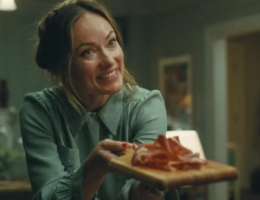

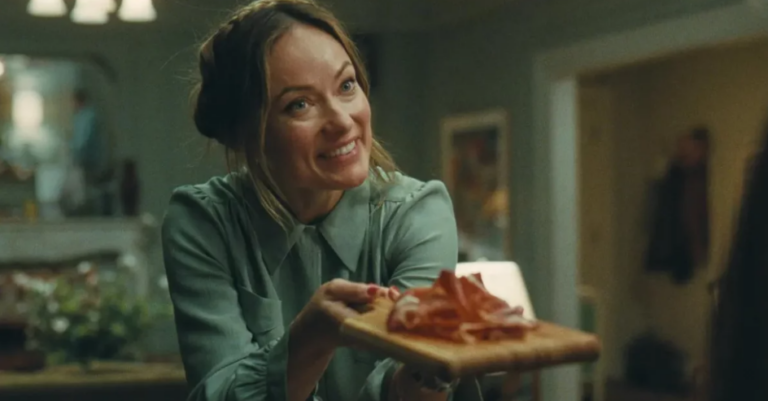
After this year’s Seattle International Film Festival, I wrote of the closing-night film, “If there was ever a movie designed in a lab solely for me to enjoy, it would be The Invite.” Since then, I haven’t shut up about how this dinner-party-from-hell, single-location feature from Olivia Wilde has been my favorite movie of the year so far.
The film is an ensemble dramedy about a couple (Wilde and Seth Rogen) whose marriage has been slowly deteriorating for quite some time. One Friday night, she invites their upstairs neighbors (Penélope Cruz and Edward Norton) over for dinner. It’s a disaster, both logically and emotionally, and nearly every secret each character thought they had managed to keep buried comes to the surface in this powder keg of a film.
During closing weekend at SIFF, Wilde was the unofficial queen of the festival. In addition to the masterpiece she wrote and starred in, she also appeared in another excellent feature: cult filmmaker Greg Araki’s outrageous sex comedy I Want Your Sex.
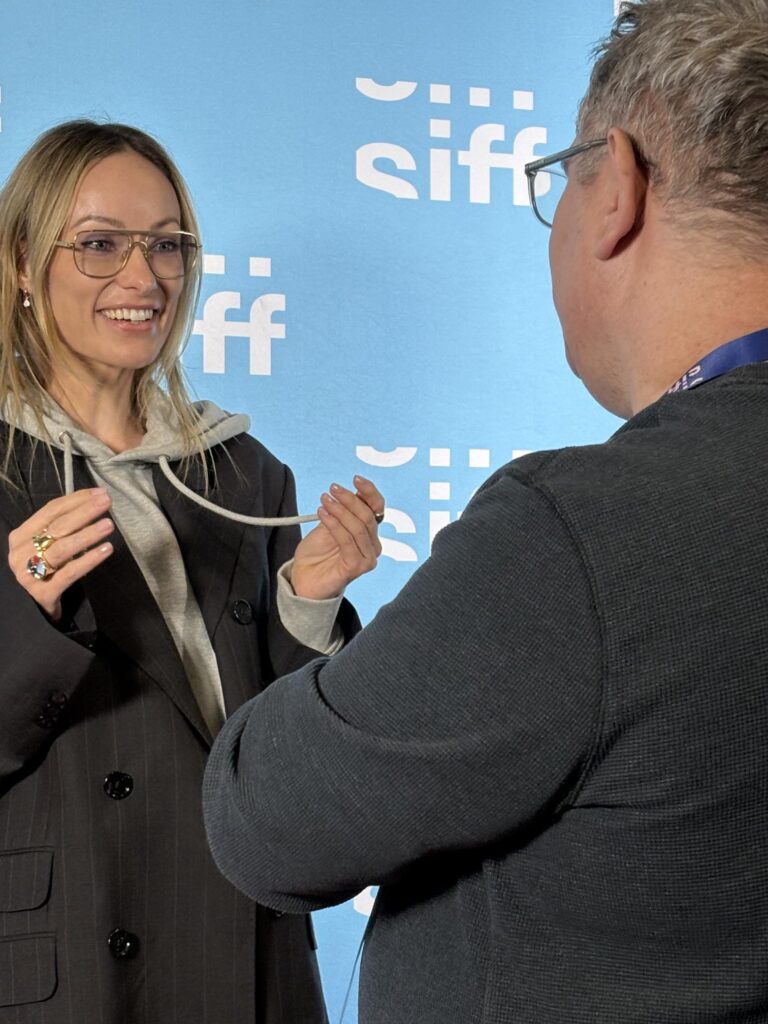
Somehow, for reasons I still don’t quite understand—and likely never will—I found myself talking with Olivia Wilde on the red carpet before the screening of The Invite.
My understanding is that you were influenced by Who’s Afraid of Virginia Woolf? I also heard you mention Annie Hall recently to the people at KING 5. Those are two of my top five favorite movies. What was it about those films from the 1960s and ’70s that helped inspire this project?
Annie Hall has a real playfulness and an unpretentious attitude toward love and relationships. I also think Diane Keaton turns in one of the best performances ever captured on film, and she was a huge influence on me as both an actor and a director. Our film is actually dedicated to Diane Keaton because of that movie and the many others she made.
But Who’s Afraid of Virginia Woolf? is truly our North Star picture for this project. Like ours, it is based on a play. Our film is adapted from a Spanish play by Cesc Gay, who also wrote and directed the Spanish film version. A chamber piece based on a play can be made incredibly cinematic if you approach it the way Mike Nichols and his team did. They created a vivid, emotional experience for the viewer that is entirely different from what you would experience watching it on stage.
When it comes to adaptations, I always ask: why are we making this a movie? What does it gain as a film that it didn’t have as a play? Virginia Woolf is the ultimate example of material being completely transformed by the medium of film, making it even more emotionally vivid. As a performance showcase for those actors, it’s clearly unrivaled.
Absolutely.
We were all inspired by the way that film transforms from a comedy into something much more heartbreaking and tragic. Our film doesn’t get quite as dark, but it attempts a similar path—traversing genres and hoping the audience will hang on for the ride.
I also understand that you shot this completely linearly, in script order. What was that experience like?
I’ve never done it before, and it was incredible. None of us had. It felt like we were putting on a play, and it allowed us to continue workshopping the material as we went. As we shot, we could reimagine the narrative based on what we had just experienced in the preceding scene.
Because of that, we were able to stay entirely honest to where the characters were emotionally. We never had to ask the audience to take an inauthentic emotional leap; every single moment felt earned. I could go on for hours about the benefits of shooting in chronological order. It’s not always logistically possible, but I am now obsessed with writing pieces set in limited locations just so we can do it again.
I haven’t seen this film yet, but you had another movie playing at the festival this weekend that I did see a couple of nights ago. What is it like having two completely different movies playing the same weekend at the same festival?
It makes me feel incredibly lucky to be a part of the independent film community. In that film, I got to step in and be a part of Gregg Araki’s creative toolbox. I was able to defer to someone else’s vision completely and just enjoy everything I learned from Greg.
It was a completely different experience from directing, but that’s what acting has always been for me: a proxy film school. That movie is so distinctively Greg—it’s singular in the way he is. And I absolutely love Cooper Hoffman; I think he is a star and someone really special.
Having both films here reminds me of when we had them back-to-back at Sundance. It just makes you feel fortunate to be part of a community of filmmakers where we can act in each other’s projects and support one another.
I absolutely loved it—it actually got one of my top votes in the Critics Poll, so I’m a huge fan.
Oh, thank you! I hope you love this one just as much.