


Telluride 2025’s 52st SHOW is off and running (and I’m gasping for air dashing around town to catch as many movies as my human body allows me to over the weekend). Will be posting quick reactions here and online (@josh-c/@thesunbreak) throughout the weekend, with longer reviews to follow.
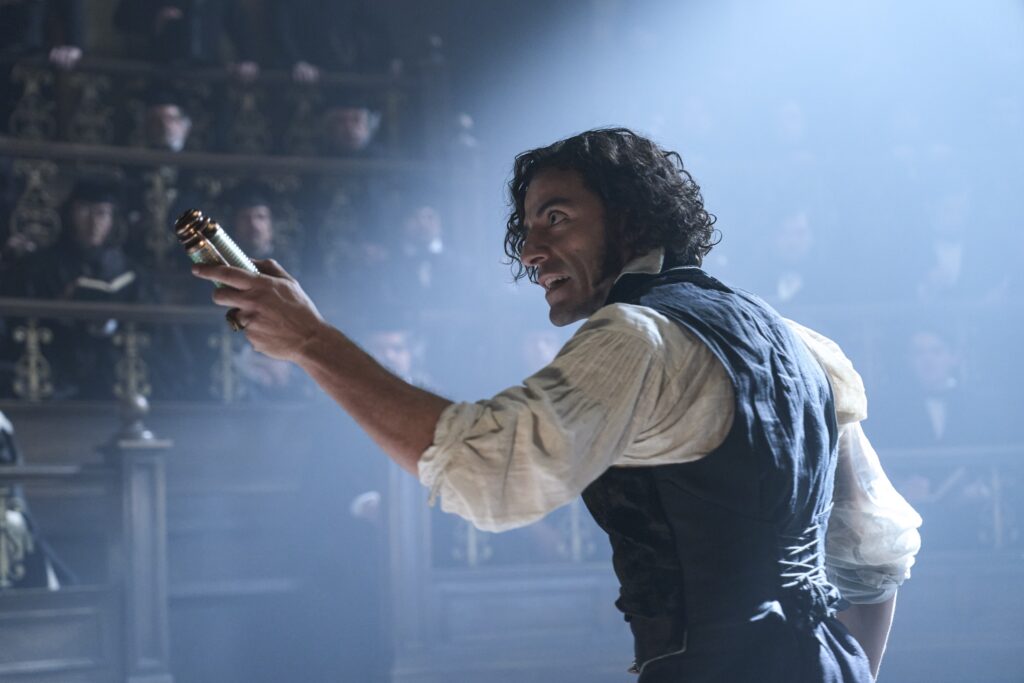
Frankenstein
Sneaking its way across the pond from its Venice premiere, news rippled through the festival on Saturday evening that Telluride audiences would be getting a “sneak” North American premiere of Netflix’s marquee retelling of the modern Prometheus. Programmed into the festival’s two largest venues for the last Sunday night shows, the speculation sent yet another jolt of excitement through town, reconfigured everyone’s late night plans, making the queues outside the Palm and Herzog theaters the hottest parties of the weekend.
Bending the ultimate myth of broken monsters and men as only he could, Guillermo del Toro threads seemingly limitless financial resources into an indulgent tapestry: a gilded culmination whose shimmering threads are pulled from his purest impulses, both generous and grisly. Oscar Isaac feasts on the meal of the misguided surgeon whose backstory is developed into a sprawling family tree of a tortured childhood separated too soon from a beloved mother and left under the stern eye of a dissatisfied father.
As an entomology-inclined bride, Mia Goth makes a splash with the most stunning of the film’s many impressive costumes and adds a spacey emotional resonance to the eventual introduction of the creature. As another addition to Shelley’s novel, Christoph Waltz brings some levity as an obsessed industrialist who sponsors Victor’s work for his own purposes.
However, del Toro’s interests lie in the intricacies of monster-making and the nobility of the creature itself and it’s here that the film takes flight. Jacob Elordi, styled more like one of Ridley Scott’s engineers than a hulking mass of reanimated flesh plays the role with quiet dignity and all the suffering of an ancient emo poet. However, the brightly-lit and CGI-enhanced illuminated storybook framing doesn’t entirely serve the vision. The telling of excruciating immortal entwinement goes deep on detail, but with ponderous plotting and leaden dialogue the spark of life remains elusive. One begins to feel more sympathy for the icebound captain stuck hearing a tall tale than the players within.
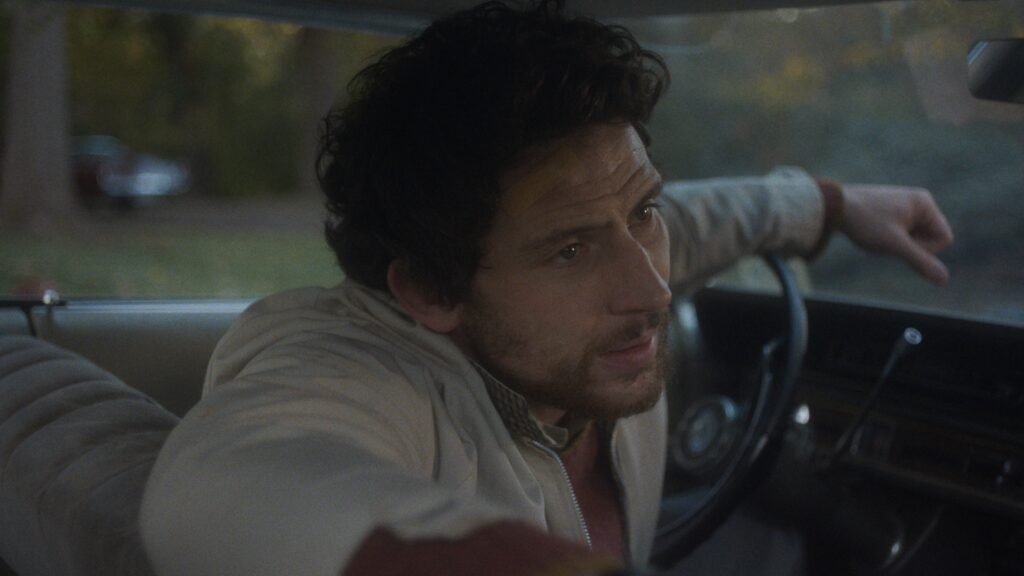
The Mastermind
Kelly Reichardt taps into a jazzy 1970s aesthetic for an art heist pic about a suburban dad with a snatch-and-grab scheme, but not much vision for what happens next. After establishing his definitive ability to execute a plan — in this case, lifting a few obscure yet meaningful paintings from the Framingham Museum of Art — the film the coasts on vibes.
O’Connor is fantastic as always (those who delighted to previous Telluride feature La Chimera will find themselves whispering “Sir, Josh O’Connor is stealing art again” into their companion’s ear.) With the first half establishing his frustrated family life, we come to understand his foundations and rumpled egocentrism.
No one can capture these rhythms of everyday quite like Reichardt. Inspired from her files of real crimes of the era (when museums were barely guarded and had circular driveways), the heist itself is a shamble of choreography of poor childcare and ineptitude, but the most quietly thrilling action scene in the film is fifteen minutes of her antihero climbing a ladder in a barn at night. It’s a sort of mastery of form and execution that few can match that carries over to the aftermath of the crime. The film’s mood, setting, and pace change entirely and we come to see O’Connor for what he is — a man unwilling to accept the dissatisfactions of his own choices. He drifts into America, revealing bits and pieces along the way. With more questions than answers, its aesthetic captures the spirit of an era when our country’s trust in itself tipped into flux and never recovered.
Jay Kelly
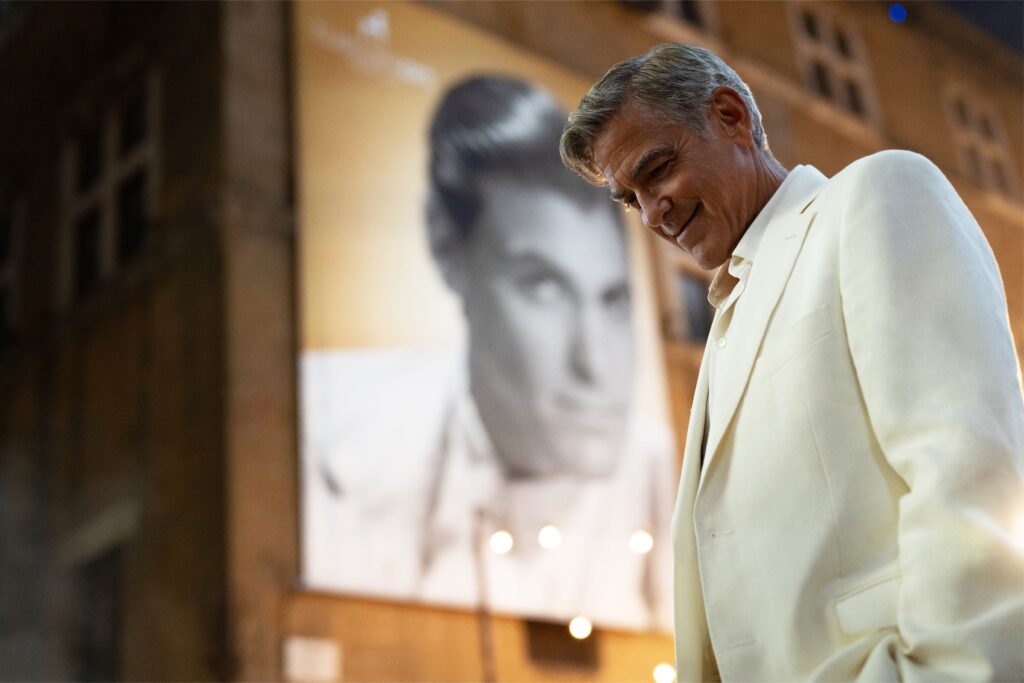
Noah Baumbach’s alternatingly introspective & cartoonish European caper makes an oddly compelling (if inadvertent) argument that the greatest role of George Clooney’s storied career just might be the public persona of George Clooney.
Playing a movie star at the tail end of his career, he lays on the charm as a global celebrity in crisis from multiple angles: wrapping a major film production, the death of a mentor, an unexpected reunion with an art school classmate, and his youngest daughter’s decision to slum it in Europe rather than spend her last summer before college with him.
Co-written by Emily Mortimer, it’s full of insider barbs and is among Baumbach’s most luxuriously-appointed films, complete with a major opening soundstage one-shot setpiece, gauzy dream walking flashbacks, and a cross-continental train from Paris to a Tuscan villa that no self-respecting European would ever take (let alone anyone with access to a private jet). The inclusion of actual clips from Clooney’s career in a within-film retrospective blurs the lines of representation, and I walked away from the surprisingly moving closing images unsure of how much of the meditation on whether the work is worth the sacrifice to take at face value.
It’s a frequently puzzling exercise that toys with the limits of celebrity, the pitfalls of parenthood, and the perils of a life of making art. With frequent leaps toward dreamlike revisionism in Kelly’s biography, it’s possible to suspect that some of this was intended as a magic realism satire (for me, it failed to generate any sympathy for his disgruntled daughters even if their behavior is a product of poor parenting). Still, the large supporting cast includes some fun Hollywood-skewering moments from Laura Dern and Greta Gerwig and showy drop-ins from Patrick Wilson and Billy Crudrup. Amid the big budget and major star power, though, it’s some sneakily sentimental work from Adam Sandler as Jay Kelly’s longtime manager that really steals the show.