


Die My Love (2025 | USA | 118 minutes | Lynne Ramsay)
With Die My Love, director Lynne Ramsay transports audiences into a discomfiting state of isolation, maternal turmoil, and creative frustration through the tremendous power of Jennifer Lawrence’s standout performance. Rarely comfortable, the experience is nevertheless rewarding, provided one is willing to ride on its often rocky currents. Mimicking the confusion and traumatic response to a deluge of major transitions and displacements, the film floats through the dream logic of a life in a frenzy of recalibrations as it grasps for a new equilibrium.
Adapting Ariana Harwicz’s novel (with playwright Enda Walsh), Ramsay’s film opens with a long static shot through a dilapidated rural Montana home. A young couple, Grace (Jennifer Lawrence) and Jackson (Robert Pattinson), have just arrived from New York, having come into possession of the property in Jackson’s rural hometown by way of inheritance from a hoarder uncle’s untimely demise. Grace appraises the empty space, mostly in silence, while Jackson yammers offscreen about its possibilities for him to make music and her to write the great American novel. She hardly seems convinced but is along for the ride.
A hard cut to a woods on fire signifies the break to their new reality, quickly dissolving into a raucous montage of the couple, naked, in the throes of passion, christening their new home with a vigorous fuck on the bare hardwood floors, to dancing in a state of advanced pregnancy in a now lived-in kitchen. Life comes at you fast, even in the middle of nowhere. When the editing settles down, Ramsay shows us a panther’s eye view of the overgrown lawn. Lawrence stalks the yard on all fours, navigating the Malickian blades of grass with a chef’s knife in one hand. Making her way to the porch, we see Jackson cracking a cheap beer, a grocery store cake on the planks, and a new baby taking in the view. From the clumsy inscription on the cake celebrating the baby’s six-month birthday, we can surmise that at least a year and a half have elapsed.
Soon we get a sense of their new life out in the country. Jackson disappears for unspecified work for most of the week, leaving Grace sex-starved and alone. Ramsay films Lawrence to accentuate the softness of her features, emphasize the soft waves of her unkempt hair, and highlight the stunned deadness of her eyes as she passes the long stretches alone with the baby in their still-unfamiliar environments.
Cinematographer Seamus McGarvey (Atonement, Anna Karenina) shoots much of the film in an ethereal day-for-night twilight. The house is in a clearing, surrounded by a storybook woods, and the cyanotype look of the film foregrounds the dissociative mindset of its protagonist. Mundane domesticity takes its toll; small intrusions on the periphery like a wandering stallion or a mysterious motorcyclist assume more ominous importance.
The days similarly stretch on, with memory and imagination ever-entwining to discredit any sense of concrete reality. After seeing him play multiple Mickeys in Bong Joon Ho’s daffy space caper earlier this year, Pattinson’s performance as Jackson as a new father, in over his head, but coping through withdrawal is a relatively reserved counterpoint to the fireworks from Lawrence. Aside from his absences from home and bed, he commits the greatest possible paternal sin of bringing a yapping dog into the home of a family with a newborn. Pattinson plays him as someone who means well, but is way out of his depth in being able to support his wife.
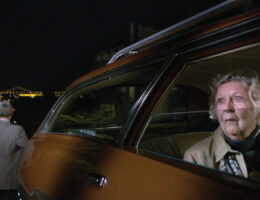
Lawrence’s true counterbalance in the film is a tenderly realized appearance from Sissy Spacek, who plays Jackson’s mother. Where Grace is reeling from the arrival of new life in the form of her baby, Spacek’s character is shell-shocked from the cavernous loss of her recently deceased husband’s absence. Like Grace, she’s awake at odd hours, sleepwalking far from home, often with a shotgun in hand. Unlike Grace, she has a sense of perspective and is one of the few people in the film to speak to her like a human, with any sense of acknowledgement or understanding of the internal struggles roiling within her in the wake of cataclysmic change.
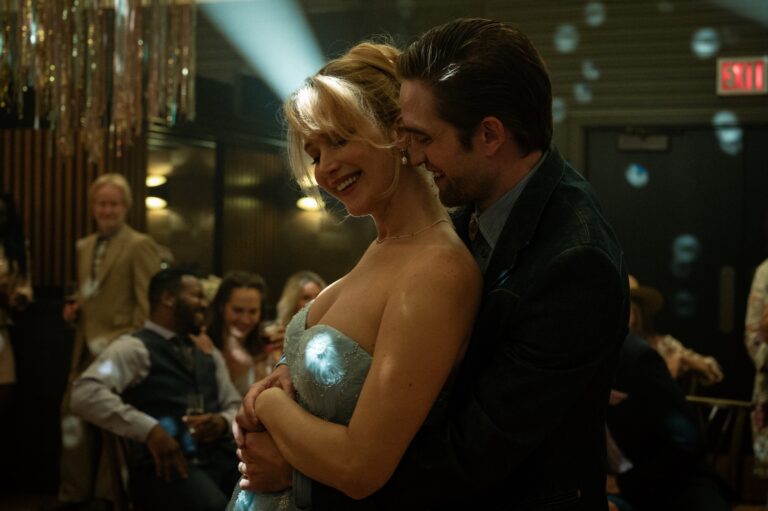
Grace’s inability to accept connections from others, though, contributes to her (and the film’s) unraveling. Past, present, and speculation intermingle, leaving viewers as unmoored as the characters. Incongruities in daily life accumulate; the dead reappear; major life events crash into existence and smash like Grace’s propensity to throw herself through glass doors or her face into mirrors to prove her own existence. A visit to a suburban house party is perhaps the most striking contrast with most of the film’s reality; a boisterous wedding makes for a cinematic centerpiece. Throughout, Ramsay adopts a level of coyness in terms of being explicit about what’s actually going on, or at least a willingness to leave the vignettes open to interpretation. I can see how these stretches of gauzy dislocation might make for a frustrating viewing experience, but if you’re attuned to Ramsay’s wavelengths, Jennifer Lawrence’s astonishing and dextrous performance is impossible to ignore.
Die My Love arrives in theaters on November 7
Image courtesy of Mubi