


The Death of Robin Hood (2026 | USA | 123 minutes | Michael Sarnoski)
Michael Sarnowski’s grimy new historical-adjacent thriller dares to ask audiences to consider a deeply uncomfortable question. What if Robin Hood was not, in true fact, a sexy swashbuckling animated fox? Let alone one who stole from the rich to give to the poor? Or to unite with his band of affable outlaws who communed in the forest of Sherwood to thwart the avaricious overreaches of a swishy spoiled despot king?
The answer, especially for those struggling day-to-day to make sense of the nonstop onslaught of insanity that mark The Way We Live Now: “damn, man, that sure would be a major bummer.”
Having previously played very successfully in the milieu of miserabilia with Pig and A Quiet Place: Day One, I was optimistic about his take to scuff up the shiny legend of a folk hero. But where his previous film found glimmers of hopeful complexity, this one takes a more relentless approach. From the moment we meet his Robin Hood (Hugh Jackman, grizzled and grey-bearded) warming himself by a small fire at nightfall in the weather-ravaged hills of thirteenth century England, it’s immediately clear that he was neither Flynn nor Fox. A starving young woman (posing as a man) spouts the familiar tales of true love and virtue. Although he summarily tosses her a morsel of food (trigger warning: so many skinned animals), he delivers with it a truth bomb that Robin Hood was nothing but a murderous vandal who used stories of valor for cover to support more murderous vandalism.
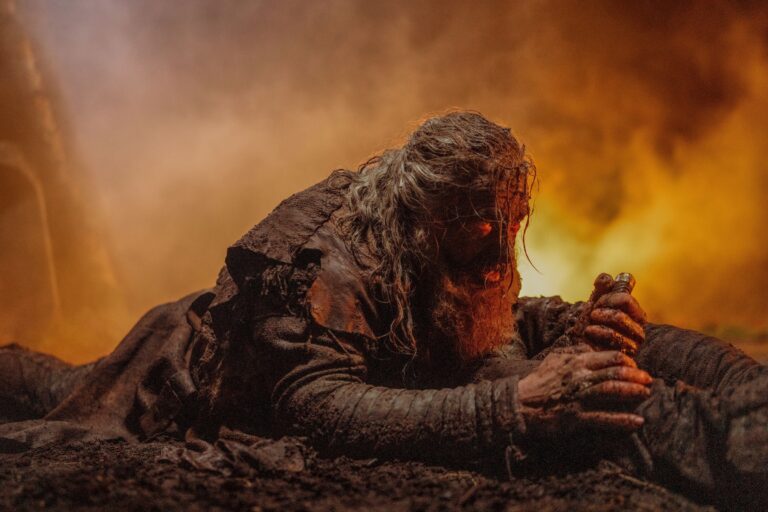
Lest you think this cantankerous mumbly man, time-worn skin covered by overgrown grey hair and protected from the elements by a collage of animal pelts, is using his denial of legend as simple cover, Sarnoski disabuses audience of any hope by the number of dogs and children’s heads who see the sharp end of his knives and trademark arrows.
The first third of the film reunites Robin with his old bestie Little John (a truly unrecognizable Bill Skarsgård). His onetime partner and crime has spent decades as the beneficiary of a violent identity theft, but the idyll of domesticity has been crushed by the realities of violent familial retribution. Jackman and Skarsgård’s scenes together echo the melancholy of late life, in which the truth has become indistinguishable from stories and memories, even among the men who lived or fabulized them. Robin joins John for one last battle with the odds stacked against them, less out of service to his friend than out of a fleeting hope that it will hasten his long overdue death.
From its opening frames, Cinematographer Pat Scola (who shot Sarnoski’s previous features) immediately conjures a grim and unforgiving medieval world, using celluloid film to capture desaturated vision of desolation. Far from the technicolor emerald greens of legend, this is a craggy and mossy world illuminated by overcast skies or the sparks of firelight against the menacing dark of night. Accompanying this desolate look, the film features some of the gnarliest kills, filthiest fights, and unforgivingly gory violence I’ve seen in quite some time. Every confrontation is tactile and brutal, combatants covered in dirt and ash, mortal wounds delivered unflinchingly. There’s little merriness to these men.
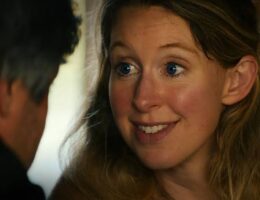
Despite the title, Robin’s death does not come quickly. The latter part of the film finds him recuperating on a seemingly enchanted island under the care of a mysterious Prioress (an excellent Jodie Comer). It’s here that some light enters the frame, in the form of seaside light that filters through windows and orchards where Robin’s rehab and physical therapy progress through gardening chores and trapping duties. We see him soften through conversations with a wise leper and warm in taking on surrogate fathering duties to a young girl who survived unspeakable trauma. Jackman and Comer share a magnetic rapport and in these sections, these two reticent characters bloom ever so slightly as the film wrestles with issues of legacy, duty, and the confounding balance of the universe.
Although it’s a welcome counterpoint to the film’s grim opening act, the story never comes into full bloom. In part, because it’s still blanketed by an overwhelming sadness without much in the way of regret, but also because much of it feels so rote. One also ponders the choice to set the action against the folk story or Robin Hood at all. Jackman’s version of the character is a compelling storyteller, but even in the less sophisticated media environment of the time it makes little sense that the gilded legend would persist so widely if the man was such a monster whose villainy and blood feuds chased him into old age. Beyond those practicalities, Sarnoski’s script also seems to lose interest in the contradiction, pivoting instead to a vague flirtation with redemption.
While some elements of the filmmaking and acting are superb, they’re often in service of a story that’s going through the motions. Be it found fatherhood, deathbed revelations, or tenuous friendships, Sarnoski is so committed to his anti-hero’s recalcitrance that the impact is diminished. It doesn’t help that we’ve also already seen a grizzled (yet still ripped) Hugh Jackman wrangling with the dark side of violent heroism in Logan, making this performance feel more like retread than re-invention. Despite some fascinating turns, I longed for it to connect — or at least have more to say — about the subversion of fairy tales. As the film’s intentions became clear, I found myself counting down the minutes until it paid off its title. While a few glimmers of insights penetrate the stony facade, a quiver full of opportunities to set loose an interrogation of myth never quite hit the target.
The Death of Robin Hood arrives in theaters on June 19th
Image courtesy A24