


Silent Friend (2025 | Germany | 146 min. | Ildikó Enyedi)
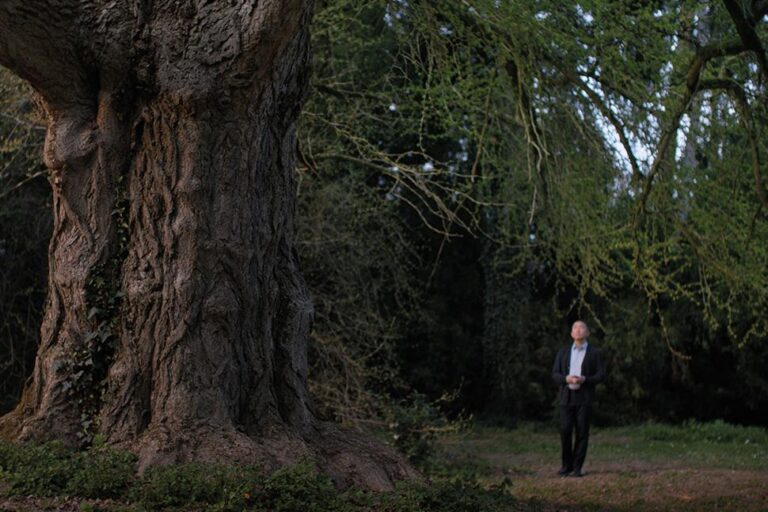
A collection of loosely intertwined stories of isolation and connection, Silent Friend is on its surface a tale of academics at a German university whose stories are intertwined by theme and place. Separated by decades, their individual foibles play out in the general vicinity of a centuries-old gingko tree in a botanical garden near the guesthouse on a German college campus.
Opening in the recent past and shot in crisp high definition, Tony Leung Chiu-wai gives a wonderfully soulful performance as Tony Wong, a visiting world-renowned neuroscientist. We see him arrive from Hong Kong to much fanfare, overzealous immersion in the campus food and drink scene, and entrancing a lecture hall full of students with an immersive introduction to his research into perception and consciousness (babies wearing crazy bonnets of brain scanners are remarkably cute). Soon enough, though, the Covid-19 lockdown finds him left almost entirely in isolation on the Marburg campus. Boredom, daily sanity-walks (familiar!), and deep dives into YouTube find his interest turning to the thoughts of plants, much to the major annoyance of a reticent security guard. It’s an even more appealing prospect when it comes with remote assistance from Léa Seydoux as another stranded academic with Zoom time on her hands.
A story set decades earlier in the spring of 1972 finds Enzo Brumm as Hannes, a dreamy farm boy who rejected the fields for the halls of academia to study literature. When we meet him, he’s willing to read in the tall grass, but anything more than that is off the table. Wonderfully grainy, deeply saturated 16mm film depicts his gradual rediscovery of the joys of plants over a languid summer. His initial attraction is to a beautiful experimental botanist (Marlene Burow) flatmate, but his affections become even stronger for her “bourgeois” geranium that he agrees to plant-sit while she decamps with other more hedonistically inclined students for a long hiking vacation. She’s attached something like an electrocardiogram to the purple-flowered houseplant in her windowsill, but it quickly finds a place in Hannes’s (and our) heart. With apologies to the collection of greenery trying to survive in my apartment, I’ve never worried more about the fate of a decorative houseplant.
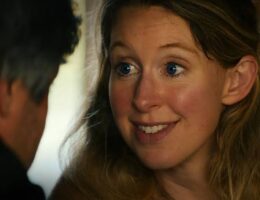
A third story, set in 1908, finds a brilliant young woman (Luna Wedler, as Grete) politely but firmly overcoming misogynistic stereotypes to find a place for herself in a Botany department overseen by deeply sexist turn-of-the-century professors. Evocatively contrasting 35mm black and white film follows her journey into the uncharted realms of the academy as the course of her studies becomes redirected and refocused through overcoming outdated social attitudes and embracing new technologies. Although she’s often met with rejection and misunderstanding, we also see her develop new ways of perceiving and gaining acceptance and allies while she perseveres.
As Enyedi and her editor Károly Szalai intercut among the triptych, humans in the audience might naturally gravitate to noticing the harmonic resonances between each of these protagonists. Even while surrendering to the symphonic arrangement of these stories, I couldn’t help but find myself puzzling over how (or whether) the three characters would formally intersect. Two characters consider the same text decades apart; one glimpses a photograph of another across the vast gulf of time. Their individual intricate stories might rhyme, but they don’t repeat. Instead, I’d have been wiser to recall Dr. Wong’s early lecture about the differences between the spotlight-focused adult awareness of exclusion versus the model by which infant brains perceive everything all at once. As the entrancing nature of the filmmaking casts a spell, the pleasures of viewing are many: the unexpected connections that each character forges, the way that lived experience reshapes interests, and how an openness to new lines of inquiry permutes identity.
On a cosmic level, then, it is genuinely funny how Ildikó Enyedi made a nearly three-hour movie about a truly magnificent old tree that could not care less about anything resembling resolution of any of the mortal stories. With our limited lifespans and human adult brains, it is understandable that we might fixate on the fates of these humans even while the film’s actual protagonist is referenced directly in the title. We see it (her) in every storyline and in mesmerizing animations throughout the film. All of their stories — and so many more — played out in its vicinity but we come to understand its own form of isolation. In its disinterest in traditional resolution, the film’s greatest joke is also a deeply rewarding call to arms, entreating us to luxuriate in the grand sweep of time and experience. We can’t truly be the tree, but we still can take inspiration in taking the patience to try.
Silent Friend is now playing at SIFF Uptown through June 4th
Image via 1-2 Special