


The Toronto International Film Festival is in full swing through this weekend, but this will be my last dispatch after scrambling around the Festival Street core to catch as many films as my body could handle. As ever, the repeated lesson of TIFF (that I forget every year) is that the films tend to get better and better after the opening days with their requirement of world premiere designation for plum spots. Acclimating to the time zone, mastering the various ticket portals, and re-acquainting myself with a trusty spot to get a cortado and some oven-warmed pastries (thank you, Daily Dose on John Street, my salvation) to offset the all-popcorn and sour patch kids diet. We’ll have longer reviews as these films certainly find their way to wider release (and Oscar conversations), but for now some quick reactions. Until then, I’ll be getting some sleep and speculating on what will win Toronto’s coveted People’s Choice Awards. [I never got a chance to see Peter Farrelly‘s apparently very crowd-pleasing I Play Rocky, but my bet’s on the Debut, but only if the vote-counters can stomach a second consecutive Telluride debut winning in Canada.]

MINOTAUR (Ryûsuke Hamaguchi)
Canadian Premiere
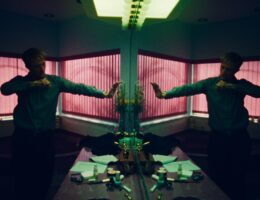
Andreï Zviaguintsev masterfully transposes Claude Chabrol’s 1969 French infidelity drama (spoiler) The Unfaithful Wife to a provincial town in Russia at the gnawing periphery of the Ukraine war. Gleb (Dmitriy Mazurov) and Galina (Iris Lebedeva) are a wealthy couple played with unexpected if chilly empathy who coexist in the comforts of their architecturally splendid country home, all modern lines, wood, and glass. Long settled into the unsatisfying yet functional routines of raising their teenage son, they have it all on a surface level. Despite their obvious dissatisfactions, they are in a standoff of compartmentalization and complacency. These are not necessarily likable people, but both are kept at a cool enough distance to be fascinating subjects for observation.
It’s possible that they could circle each other’s failings for years if not for the intrusion of political circumstance. Mounting pressures to supply the war machine with fresh bodies to conscript to the frontlines of the conflict paired with a quiet exodus of workers to other countries puts a strain on Gleb’s business that ripples into his personal life. While he comes up with a sinister yet effective solution to one problem, a sudden shattering act of violent retribution at the discovery of another unmoors their equilibrium.
Zviaguintsev depicts both near-spontaneous decisions and their consequences with incisive bleak humor and excessively patient attention to process. A long stretch of the film is consumed by extended cleanup scene depicted in such detail that it approaches comedy. The toll that it takes, though is purely one of physical exhaustion. Reflecting the country’s own growing concerns on the periphery and set against immense structural privilege, this clinical study of a frayed marriage is one where personal ramifications rather than repercussions are the only pressing concern. Bracing and timely.
A TALENT FOR MURDER (Anton Corbijn)
World Premiere
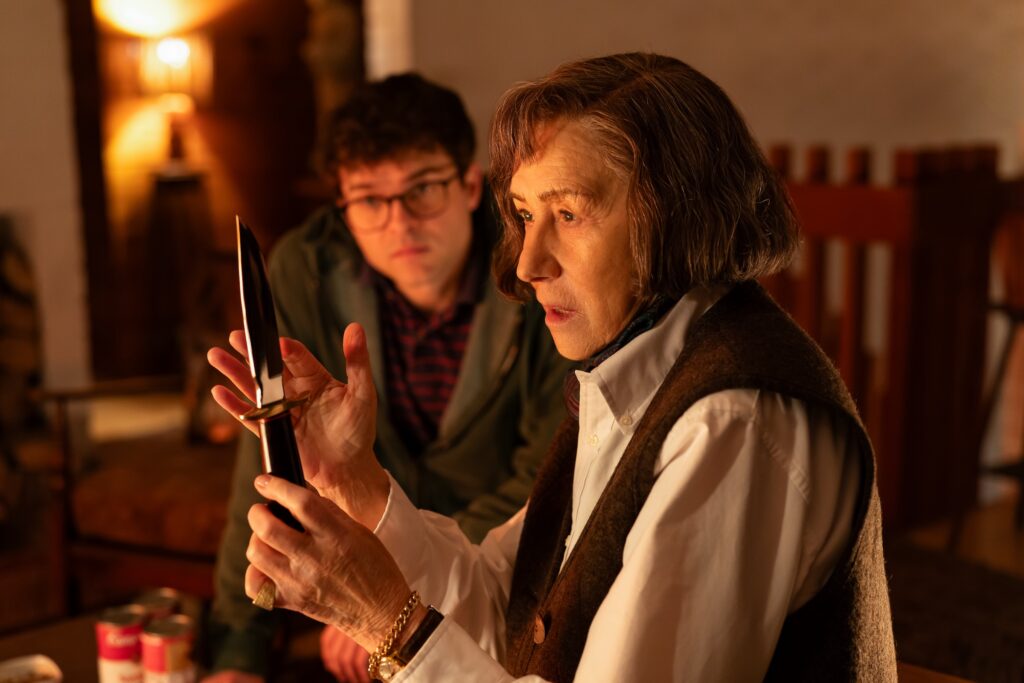
Patricia Highsmith may have never written a sixth Tom Ripley novel, but what Corbijn’s mostly harmless film asks is “what if she had imagined what it might be like to contemplate writing one just more?” On its surface, the concept is fun: we watch as she thwarts and later obliges an overeager literary agent in plotting what sort of antics her charming antihero might get up to if given another highly profitable installment. For a while, it’s fun to watch as they conjure nefarious fictions and glamorous settings from the mundane events of real life. The gambit doesn’t entirely pay off, with the resulting story groaning at the constraints of the concept, an unsophisticated facsimile of what would surely be a better book in the real author’s far more capable hands.
On the bright side, Alden Ehrenreich gets to do some very slick Tomplay, inhabiting dual roles as both the earnestly fanboyish agent desperate to land a contract and a convincingly seductive incarnation of Ripley himself. He’s quite excellent in what amounts to a double dual roles, a young editor concealing his ambition and a murderous societal climber concealing his ambitions behind a suave facade. The globe-trotting adventure plays as travel and privilege porn as trains crisscross Switzerland and fantasies of stolen inheritance plots inhabit an the imagined upper echelon haunts and homes of mid-century Italian cities. Helen Mirren has a ball as a cranky recluse with a menacing weapons fetish, a taste for the drink, and an inexplicable fondness for snails. Eventually, though, the framing device begins to falter, stalling the story’s momentum and undermining itself entirely. As the air goes out of it all, you can’t help but with that someone had simply had the courage to cast the excellent Ehrenreich outright for the slippery and alluring lead role in a a better-written version of the story they’re cobbling together onscreen.

LOOK BACK (Hirokazu Kore-eda)
North American Premiere
Hirokazu Kore-eda again demonstrates his remarkable facility with young actors in this wistful double adaptation. Like the recent anime adapted from a Tatsuki Fujimoto’s acclaimed manga, we follow a formative friendship between two girls. Fourth grader Fujino (Furi Nanase) is her class newspaper’s star cartoonist, nearly a celebrity whose ego is easily stoked by praise. She’s at the top of her game until the day that the teacher publishes an elegantly drawn comic strip from mysterious shut-in Kyomoto (Rokka Okada), too shy to attend school. The girls are quietly each other’s biggest fans. An initial unspoken rivalry motivates new levels of dedication and obsession to craft. When they finally meet, they’re instantly bound by a love of drawing and creating manga.
The sweet but not cloying performances of the children are eventually handed off to older actors (Natsuki Deguchi and Aju Makita, respectively) who take over as the pair grow older and more ambitious. Captured throughout in 35mm film, the frame remains tight on their creative lives to the exclusion of all else beyond the inspiration they take from the outside world and its execution on the page. This tight focus informs the minimalistic approach to character development, with tender meditation on the essential nature of the creative collaboration its central concern. With a culminating montage celebrating a dazzling array of animation styles, the film fractures to account for the alternative paths their lives take. Infused with the melancholic air of possibility and recollection, the tactile nature of their collaboration unfolds in elegantly composed vignettes wistfully inked across days, seasons, and years.
TENZING (Jennifer Peedom)
Canadian Premiere
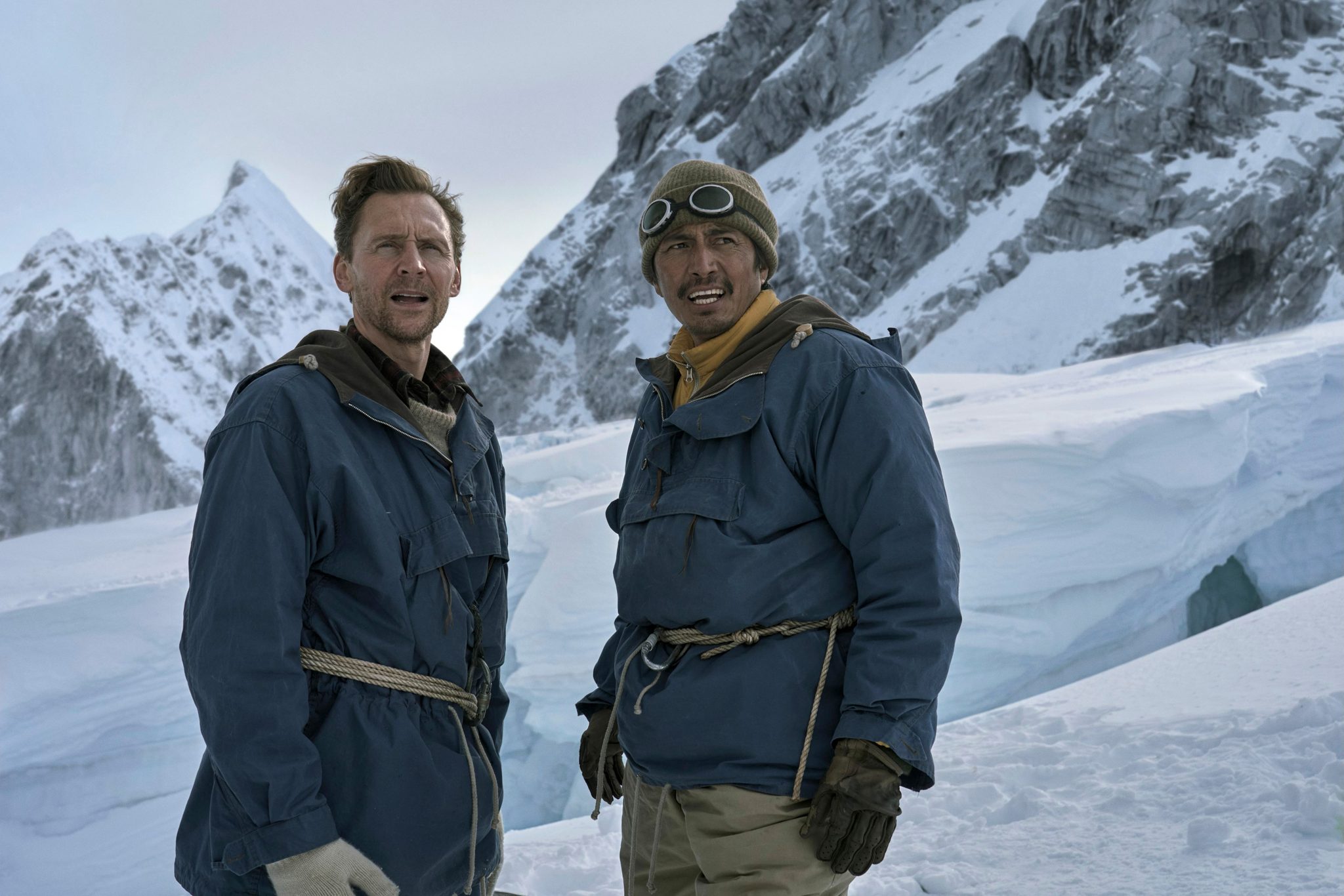
Dutifully sincere, a long-overdue recentering of the historic and harrowing story of the 1953 ascent of Everest on Tenzing Norgay, the “other guy” who finally reached the summit alongside a Kiwi beekeeper called Edmund Hillary. Tom Hiddleston is the bigger name (who plays the more famous fellow), but he’s but a supporting player in a story firmly situated on the charms of Genden Phuntsok in the title role. Documentary filmmaker Jennifer Peedom slides into narratives, opening her feature with a scene of a little yak herder boy on the Tibetan plains gazing in wide-eyed reverent wonder at the sight of a very big mountain, so look elsewhere for subtlety. Soon after, the lad has a guided-by-fate meeting with George Mallory and his fascinating foreign modern spiked boots. Decades later, a well-practiced English phrase paired with this namedrop will get him a coveted and well-paying place on a British expedition to conquer his beloved Chomolungma. It will be his first of many attempts leading up to his recruitment and insistence on being a full member of the climbing team for John Hunt’s (Willem Dafoe) Joint Himalayan Committee’s attempt to reach the pinnacle for England’s new young Queen.
Intercut between the big expedition, rife with its own struggles of class and nationality, the story illuminates the many struggles of Norgay’s life. Woes of childhood abandonment to local prejudices flash alongside a love for his family and reverence for the mountains. Aside from some maps with dotted lines, the handsomely mounted tale largely forgoes the technicalities, strategies, and challenges that face the mountaineers. There are, of course, many scenes of hale men huddling in tents, tromping through snow, or careening across crevasses, but Peedom’s core interest is the personal nature of the story. With an old-fashioned structure and family-friendly nature, the retelling frames the grueling expedition as an outsider’s spiritually respectful journey rather than one of conquest.
There’s an irony that this is being launched at all the same festivals as National Geographic’s exceptional documentary Everest: The Other Side. It is a totally unfair yet unavoidable comparison, but even though we see real actors climbing on a real mountain in Tenzing, those mountains are in New Zealand and the actors are not extreme athletes. The films have vastly different aims, but all the money in the Apple Studios coffers and gauzy emotive recreations in service of conveying justifiable inspiration simply don’t stand a chance at competing with the immediacy of tragic reality.