


The Diary of a Chambermaid
(2026, France/Romania, 94 min, Radu Jude)
In the final segment of Radu Jude’s episodic, AI-infested take on Dracula, Romania’s leading auteur presented a simple tale of a garbage man barred from seeing his child’s school performance. After both a takedown of Wenders’s Perfect Days in Kontinental ‘25 and a preceding 3-hours of dick-sucking, cock-harvesting vampires, the implicit argument underlining this piece of unprecedented sentiment seemed to be that this social-realist fable’s manufactured emotions were just as susceptible to AI as the more blatantly brain-rotted material before it.
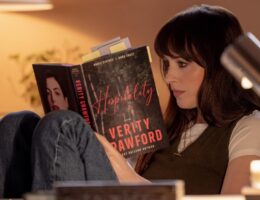
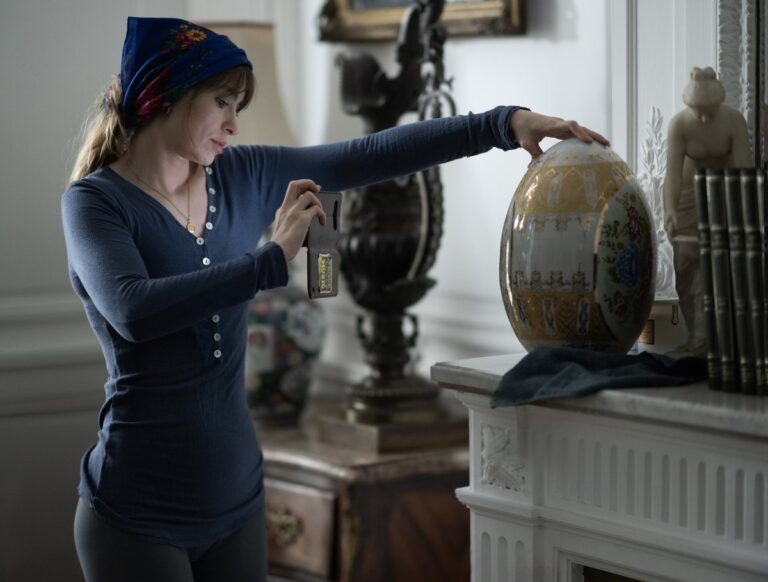
The Diary of a Chambermaid is Jude’s most sentimental tale yet, and a film whose emotional directness is a provocation in the context of this particular auteur. This present-day version of Mirbeau’s classic novel (which has at least 2 canonical adaptations by Renoir and Bunuel) follows Gianina (Ana Dumitrascu), a Romanian migrant working as a nanny for a family of rich, liberal intellectuals. Separated from her daughter, who she’ll see for the holidays, the film is structured in diary entries counting down the days until her winter break. In between her daily duties cooking, cleaning, and babysitting, Gianina calls her child who’s becoming increasingly distressed at her mother’s absence and can’t comprehend why she’s on the other side of the continent taking care of some random boy.
Something rather striking about The Diary of a Chambermaid is that it avoids a caricature of the abusive employer, and in doing so, turns Jude’s usual critiques of class and international relations in a systemic direction. We hear Gianina tell the mother that her former employers beat her and took her passport, and it’s important in this case that Jude chooses to mine heartbreak out of liberal niceties. This family pays her on time and treats her relatively nicely, but they’re hopelessly naive, and their blinkered Frenchness is solipsistic and masturbatory. During her tenure, Gianina’s most frequent indignities relate to politics, as these Western Europeans look to her as a mascot of her country, co-opting her for their dinner table arguments. The cavernous mansion comes to stand in for the employers’ blinkered perspectives. Here, the iPhone imagery of Gianina’s daughter is just as distant as the POV livestream of the Ukrainian war that gets shared at a dinner party.
On account of Gianina’s skill at telling children’s stories, she is enlisted by the university theater group to star in an adaptation of The Diary of a Chambermaid (directed within the film by Jude regular Ilinca Manolache as “Ilinca”). Gianina stars alongside another nonprofessional migrant from a non-EU country. Cartoonishly vulgar in its depiction of the lascivious master/chambermaid relations, whether or not Gianina’s role in this play is exploitative is a tricky question. When placed alongside Gianina’s relatively mundane daily life, this gratuitous theatrical adaptation looks much less faithful than the film’s sentimental reality. Eventually, Gianina’s scene partner is deported because of a lighting assistant’s Facebook post and the troupe’s good, liberal intentions come face-to-face with the reality of their actions.
By casting Manolache as director and calling back to some of the more theatrical segments in Dracula, Jude raises a set of interesting questions about his process. Is the Jude vulgarity becoming a brand? Is his consistent self-identification into his gig economy subjects its own form of exploitation (certainly, Jude’s reliance on French funding is part of the film’s metatext)? What does it mean to make a faithful adaptation in a time when reality has irrevocably fractured?
In placing these two drastically opposed adaptations side-by-side, Jude undermines the authenticity of both, but does so without sacrificing the clarity of his intent, namely, identifying the intersectional hierarchies revealed by Gianina’s employment. Moreso than any of Jude’s other films, The Diary of a Chambermaid implicates his cinephile audience. Throughout the film, we see how Gianina’s daily routine threatens to be overwhelmed by particularly French reference points. The diary structure begs to be read as Rohmerian (a connection that’s concretized when Marie Riviere becomes a major character), and the frequent shots of Gianina slicing vegetables are a trap in Jeanne Dielman clothing. The audience is lumped in with the family, people like Marie Riviere’s character who imagine themselves as leftist revolutionaries but are actually overbearing narcissists. Jude brilliantly weaponizes cinephile catnip, playing with the Western canon like it’s a franchise property. This tension also clarifies Jude’s recent forays into adaptation, as he finds himself working within the bounds of Western European parameters.
The Diary of a Chambermaid plays at NYFF on October 8, 9, and 10. It’s distributed by Film Movement
Image courtesy Film Movement.