



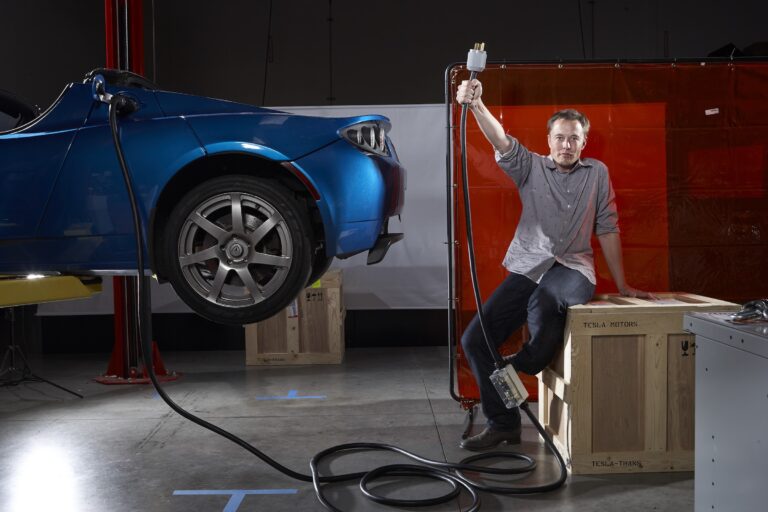
Musk
(2026 | USA | 235 minutes | Alex Gibney)
Alex Gibney has established himself as a go-to director for documentaries exposing the dark underpinnings of influence and power. Be it for television or the screen, based on books or original reporting, he has shaped complicated stories into digestible yet illuminating films. Taxi to the Dark Side, about abusive CIA techniques in Afghanistan, won him an Oscar in 2007. He brought home an armful of Emmys for Going Clear, an investigation of Scientology. In recent decades, alongside fascinating portraits of artists and creatives (including this year’s potent portrait of Salman Rushdie in the aftermath of a terrorist knife attack), his subjects have included tech titans like Steve Jobs and Elizabeth Holmes, and major economic and global phenomena like Enron and WikiLeaks. His latest documentary follows the natural progression of this path to profile perhaps the most frighteningly influential of all: Elon Musk. Commensurate with the outsized scale and unimaginable scope of his influence, Gibney’s attempt to tell the whole story stretches for nearly four hours. That runtime is more than enough to curdle the stomach, yet barely scratches the surface.
Bifurcated into two parts with a very necessary intermission, the film opens with an introduction to Musk’s contradictions. A man who’s convinced that we’re likely living in a simulation who also claims to be committed to preserving humanity via colonization of space. A lover of the Hitchhiker’s Guide to the Galaxy who might not understand that it’s meant to be funny. An online shitposter with a diabolical laugh yet no detectable sense of humor. But more importantly, a self-styled inventor who hasn’t actually invented much of anything himself. There’s perhaps a grudging sense of admiration in these early sections of his rise to power, even as they expose the degree to which much has been an unbelievably successful confidence game.
We meet an awkward young man whose early involvement/investment in the nascent tech world led to both an early ouster and a massive financial windfall. The vast sums of money gained him the freedom to dabble in electric cars, later rewriting the history of Tesla, a company that he invested in, to one that he founded. Gibney gains insight into his business practices by way of the company’s facility with image manipulation regarding the capabilities of its self-driving cars, which had a bad habit of crashing and killing people. Tech journalists, government partners, and an ex-wife provide context and insight through interviews. Odd beliefs and family history emerge alongside his corporate antics. Later, a similar pattern of ownership and self-promotion emerges while SpaceX’s rockets explode on the backs of massive government contracts. Just as things seem on the edge of failure, a successful launch marks a triumphant turn.
Fittingly, this liftoff mirrors the degree to which the second half ascends in the scale of bizarre contradictions, shady practices, and personal behavior from a mere mortal tycoon to an Omega Level player whose erratic beliefs, score-settling, and terrifying influence have already reached a scale of planetary influence. Gibney casts the signature event ushering in the current era of our history alongside a veritable supervillain: was, naturally, the Covid-19 pandemic, which marked the first time in a decade when someone tried to tell Elon Musk what he couldn’t do. The virus seems to have awoken his mind to a new reality, flipped a switch on his skepticism of Artificial Intelligence, and ignited a passion for meddling in politics. It finds him throwing massive sums into elections, allying with other tech moguls, and ultimately purchasing Twitter for an outrageous price to assure the “free speech absolutism” to assure that the worst of the worst have a platform for their dangerous ideas. Soon enough, a scorched-earth campaign to reshape one media company was magnified into a similar effort to drastically reshape the government of a president that he helped to elect.
Nauseating on their own — inexperienced young men purging government agencies and programs for laughs while causing the deaths of millions through cancellation of food aid, research programs, and vaccine assistance — these latter-day segments also paint an upsetting portrait of the man himself. From an embrace of the fashion of “Dark MAGA,” we see a chainsaw-wielding maniac desperate for laughs and attention alongside deeply unsettling personal stories of custody battles for a cute son who’s treated like a mascot contrasted with the cruel disowning of his trans child and indifference to a Nazi-loving generative AI that’s easily employed to generate sexually abusive images of women and children. All illustrate the degree to which spinning one failing endeavor into another makes him the world’s richest man (to the tune of over a trillion dollars in wealth) whose companies (having escaped regulation, in large part via his speedrun through targeted government downsizing) have granted him unprecedented global influence. Flipping the on/off switch for Starlink grants veto power in matters of warfare; tweaking the algorithm enables politicians friendly to his financial aims to rise across the globe. It’s not a pretty picture, but a synthesis that’s essential to understanding just how boiled we are becoming as frogs.
Alongside so much vital material, Gibney does make a series of near-catastrophic choices in shaping his documentary. Some, like the reliance on figures like Ashley St. Clair as a primary witness, are understandable. Despite being an opportunist whose beliefs have shifted drastically with the tides of influence, she offers a rare insight into Musk, including unsettling insinuations about his hand in the 2024 election. Others, structural choices, though, are more baffling. While using familiar techniques like counterposing real history with fiction (The Man Who Could Work Miraclesserves as a central metaphor) and pop music clips, Gibney responded to the lack of direct access to Elon Musk by creating a virtual photorealistic AI avatar to give voice to previously recorded comments available in the licensable archive. With its oversized face and gleaming white teeth, this creation does look uncannily like Musk and succeeds in being deeply annoying. I cringed every time it appeared on screen, which fairly or not may have been the desired effect. Equally off-putting is the choice to introduce an ongoing metaphor of a low-res first-person shooter style video game to illustrate concepts like collecting influence and dramatizing events like mass firings. I’m not a gamer, but these antic sections with jarring soundtracks both undermine the seriousness of the material and serve only to stretch the already long-running time. Four hours in the company of a humorless, vindictive megalomaniac and his world-breaking exploits is already a lot to ask. Padding it with these segments adds unnecessarily to the pain.
There’s an extent to which these choices are forgivable given the film’s aims and Gibney’s facility in assembling and synthesizing vast amounts of material. The deeper, unsolvable problem, though, is almost a synecdoche of the problem with Elon Musk himself. So vast is the scale of his reach and so troubling the ways that he achieved it that in attempting to describe it all, it boggles the mind. Episodes that consume a few minutes of screen time could easily be multi-hour documentaries of their own, from the financial double-dealing, the spigot of SpaceX/Starlink/X/Tesla, unimaginable troves of government data gobbled by the DOGE program, his attempt to repopulate the world via his own targeted sperm donation, an embrace of unchecked AI and robotics, not to mention the widespread reports of drug use. The challenge to the viewer, then, is to take in this material without being overwhelmed by a sense of futility. Perhaps the ship hasn’t sailed, and this era of gaslighting normalization of impossibly wealthy people in absurd costumes, appalling demeanor, jestermaxxers ruling the world via the apparatus of the unchecked power that they’ve grabbed from us isn’t forever. It’s not Gibney’s job to fix any of this, and even though they say that knowing is half the battle, we’re left wondering — as the credit roll — whether it’s too late to collectively figure out what the other half is.
Musk had its North American premiere at the Toronto International Film Featival. After opening last weekend in limited release, it expands to additional theaters on October 16th
Image credit Greg Segal courtesy of Bleecker Street